Académicos

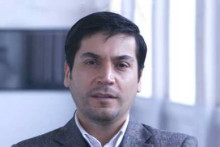
Universidad de Santiago’s professor to head the Computational Intelligence Society Chilean Chapter

Dr. Gonzalo Acuña was elected president of the Chilean representation at the Computational Intelligence Society, which is part of the world’s largest professional and technical association in this field. Also, professor Acuña became Chile’s representative at the Latin American Computational Intelligence Society.

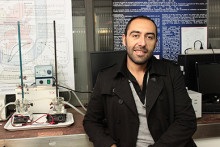
Descontaminan aguas gracias al uso de electricidad y energía solar

En el marco del Ciclo de Seminarios del Departamento de Ciencias del Ambiente de la Facultad de Química y Biología, el Dr. Ricardo Salazar dio a conocer los alcances de investigaciones en torno al tratamiento de aguas contaminadas por residuos de las industrias textil y farmacéutica, utilizando métodos electroquímicos.

Water decontamination through electricity and solar energy

In the context of a series of seminars ran by the Department of Environmental Sciences of the Faculty of Chemistry and Biology, Dr. Ricardo Salazar informed about the scope of the research on treating waters contaminated by textile and pharmaceutical industry effluents through electrochemical methods.

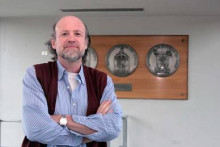
Organismo internacional incluye estudios de académico del Plantel en compendio sobre TIC y Educación

La Red Latinoamericana de Portales Educativos (Relpe) incorporó al director del Centro de Investigación e Innovación en Educación y TIC (CIIET), Dr. Juan Silva, en una publicación que reúne a destacados especialistas iberoamericanos del área.

International organization’s compendium on ICT and Education includes work by academic of Universidad de Santiago

The Latin American Network of Educational Portals included the work done by Dr. Juan Silva, director of the Center for Research and Innovation in Education and ICT (CIIET, in Spanish), in a publication that gathers together renowned Latin American experts in this field.

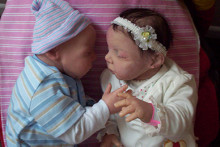
Muñecos aportan al aprendizaje en carreras de la Salud

Un efectivo aporte realiza la académica de la Escuela de Obstetricia, Paula Núñez, quien aprendió la técnica de confección de los bebés simuladores (reborn) en base a vinilo, cuyas características son tan reales, que hacen difícil la distinción con los recién nacidos, al tiempo que propician el desarrollo de destrezas y las habilidades blandas entre los estudiantes.

Dolls used as training aids for midwifery students

Paula Núñez, a professor at the School of Obstetrics and Child Care of Universidad de Santiago has effectively contributed to midwifery students training: she learned to make vinyl-based reborn babies which are so real that it is difficult to distinguish them from real newborn babies and which help students to develop professional and soft skills.

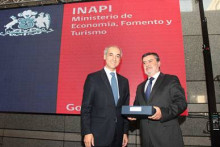
Distinguen a la Universidad por alto número de solicitudes de patentamiento

El Instituto Nacional de Propiedad Industrial (Inapi), premió a nuestra Casa de Estudios por destacarse como la tercera universidad chilena con mayor número de solicitudes de patentes de inventos, que buscan aportar al desarrollo país en áreas como la química y biología, ingeniería y tecnología. El director nacional de Inapi, Maximiliano Santa Cruz y el vicerrector de Investigación, Desarrollo e Innovación de nuestra Institución, Dr.

University receives recognition for its high number of patent requests filed

The National Institute of Industrial Property recognized Universidad de Santiago as the third Chilean university with the highest number of invention patent requests that seek to contribute to the country development in fields like chemistry and biology, engineering and technology. Maximiliano Santa Cruz, Inapi’s National Director and Óscar Bustos, Vice President of Research, Development and Innovation of Universidad de Santiago,   encouraged the University community to continue constantly producing industrial innovations to contribute to society.

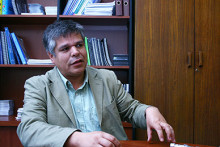
Estudian moléculas inorgánicas que podrían ser útiles en tratamiento del cáncer

El académico de la Facultad de Química y Biología, Dr. Luis Lemus, a través de un proyecto Fondecyt de Iniciación, investiga la interacción de las nuevas moléculas denominadas "helicatos" con el ADN, con el fin de evaluar el desarrollo de drogas más específicas para combatir este mal, evitando los efectos destructivos de la quimioterapia o radioterapia.