


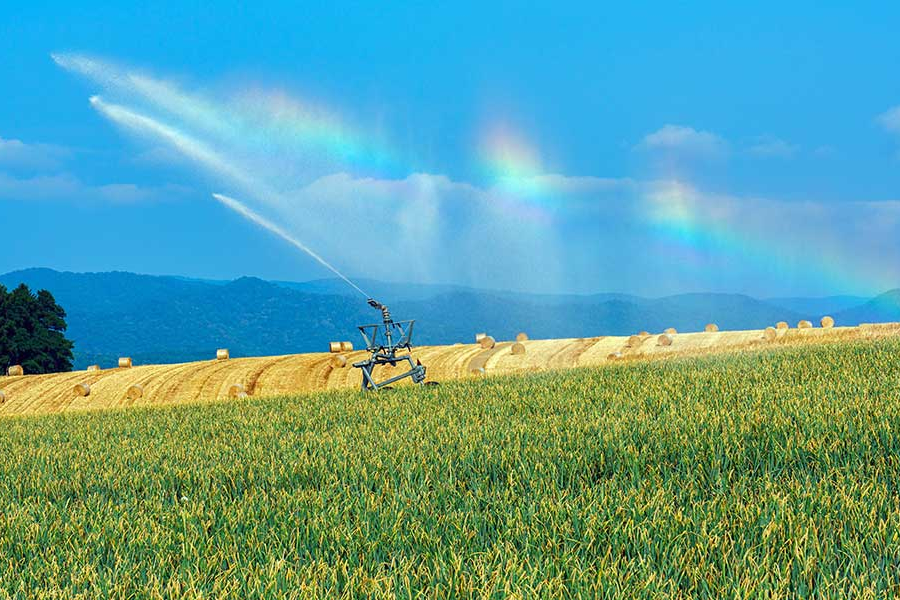
Chile has cemented its position as one of Latin America’s top agricultural producers, recording steady industry expansion over the last few decades. Official Ministry of Agriculture statistics show that Chilean agricultural and forestry exports increased by 6.5% between 2022 and 2025, driven by strong market dynamism.
To maintain its leadership in global export markets, the Chilean agricultural industry must adopt sustainable, high-efficiency solutions to improve irrigation water quality and crop safety.
Tackling agricultural water contamination, the University of Santiago de Chile has launched an innovative research and development project titled “Protecting Public Health: Strategies to Eliminate Endocrine Disruptors (Perchlorate) in Water Sources.” Directed by Dr. Nicolás Arancibia Miranda alongside researcher Dr. Karen Manquián Cerda, the Faculty of Chemistry and Biology team is pioneering solutions to remove harmful chemical contaminants from irrigation supplies.
The initiative is funded by the National Research and Development Agency (ANID) in partnership with Universidad Bernardo O’Higgins. It also brings together industry partners Agrícola Gómez SpA and Sociedad Comercializadora Hortaliceros de Palquibudi Ltda., with strategic support from Usach’s Technology Management Division under the Office of the Vice Rector for Research, Innovation, and Creation.
“Endocrine disruptors are substrates or compounds that, at high concentrations, can have negative effects on the human body,” notes Dr. Nicolás Arancibia. He adds that, in the specific case of perchlorate, it is a contaminant whose “presence may be associated with fertilizers and found in water sources used for irrigation, which are then absorbed by plants.”
"Our goal is to develop a synthetic material that filters perchlorate out of irrigation water and converts it into chloride for industrial-scale deployment," explains the researcher.
The research focuses on developing an eco-friendly, highly efficient water treatment technology that is affordable for farmers, offering a cost-effective alternative to commercial perchlorate removal solutions currently on the market.
Collaboration and Expected Impacts
After two years of intensive development, the project is entering its final phase. Having successfully synthesized the material, the team has now validated its performance in lab-scale testing.
“We have carried out much of the experimental work at the Soil and Environment Laboratory of the School of Chemistry and Biology, where we performed the synthesis and testing,” explains Dr. Nicolás Arancibia. He adds that “the tests conducted have confirmed the product’s effectiveness.”
The research team has also collaborated with colleagues at the Bernardo O’Higgins University, analyzing the data obtained during the various evaluation stages. For field tests, they have partnered with Agrícola Gómez SpA—a vegetable producer in the Valparaíso Region—and Sociedad Comercializadora Hortaliceros de Palquibudi Limitada.
“The participation of these stakeholders in the agricultural sector has been key to understanding the real-world conditions under which the technology should operate and to tailoring its development to the needs of producers,” says Arancibia. He adds that “farmers have provided very valuable information regarding crop sizes, the areas involved, and the characteristics of the irrigation systems used on the fields.”
Regarding the next steps in the research, he states that the goal is to “move from a solution initially developed and validated in the laboratory toward a system that can be tested directly on farms and, in the future, scaled up for eventual industrial application.”
Upon completion of the project, this development is expected to contribute primarily to food safety and public health by reducing the presence of the contaminant in irrigation water and, thereby, minimizing its potential transfer to fruits and vegetables.
“In this way, we will be helping to maintain the quality of production and positively impacting the sector’s competitiveness,” concludes Dr. Arancibia.