


The Chilean aquaculture industry faces ongoing productivity challenges, including emerging viral diseases that severely impact fish health and cause significant production losses.
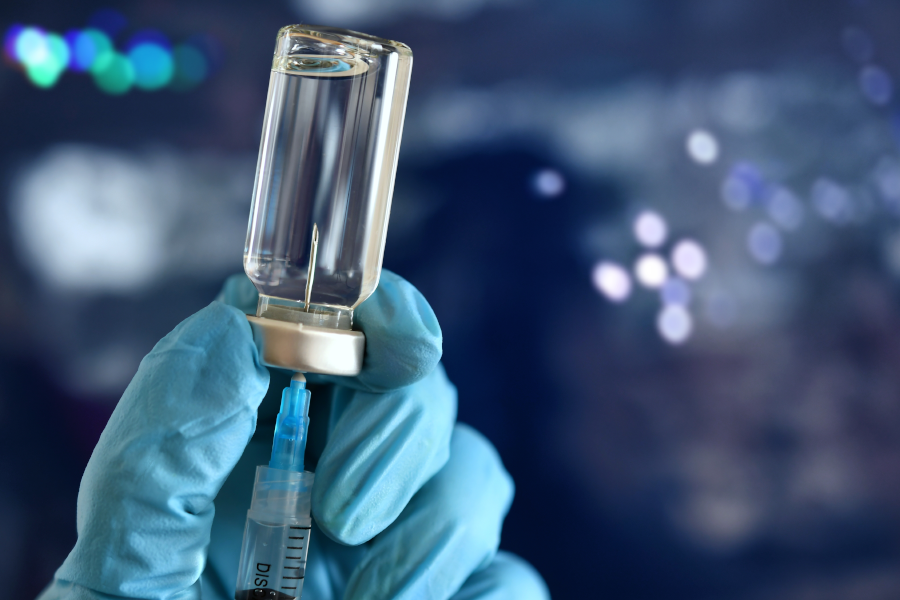
To provide innovative solutions, the University of Santiago de Chile (Usach) executed the Fondef IT project: “Validation of a Prototype Vaccine Against Piscine Reovirus 1 (PRV-1)", demonstrating a pilot recombinant vaccine's protective potential in Atlantic salmon. The study was led by researchers Dr. Marcelo Cortez (Faculty of Chemistry and Biology) and Dr. Yesseny Vásquez (Faculty of Medical Sciences).
Tras dos años de desarrollo se efectuó, en modalidad remota, la actividad de cierre del proyecto, donde se dieron a conocer sus principales resultados y proyecciones. La instancia reunió a integrantes del equipo científico; la Dra. Gloria Levicán, vicedecana de Investigación y Postgrado de la Facultad de Química y Biología; Tomás Cancino y Matías Poblete, ejecutivos de Veterquimica; Dra. Marlene Henríquez, gestora de propiedad intelectual y transferencia tecnológica de la DGT, académicos, estudiantes y profesionales vinculados al ecosistema de innovación de la Universidad.
After two years of development, the project's closing event presented its main results and projections. The meeting brought together the scientific team, including Dr. Gloria Levicán (Vice Dean of Research and Graduate Studies at the Usach Faculty of Chemistry and Biology), Tomás Cancino and Matías Poblete (Veterquimica executives), and Dr. Marlene Henríquez (Intellectual Property and Technology Transfer Manager at the DGT), alongside professionals from the university's innovation ecosystem.
Dr. Marcelo Cortez noted that “our research team is validating a prototype vaccine against Piscine Reovirus 1, the causal agent of Skeletal and Cardiac Muscle Inflammation (HSMI), a disease severely impacting farmed fish health and survival rates, especially during juvenile stages.”
The researcher explained that this initiative builds on previous studies where a laboratory-scale experimental formulation significantly reduced viral load in immunized fish, “demonstrating high vaccine efficacy in the prevention and treatment of this disease,” he noted.
He added that “previous research demonstrated a promising protective response. Building on that foundation, we have entered this new phase to validate its safety, immunogenicity, and vaccine efficacy in a relevant environment, bringing us closer to rapid deployment in aquaculture production.”
Potential for Industry Application
The project successfully developed a safe, low-cost, injectable recombinant vaccine, scaling up antigen production in a bioreactor using insect cells. These attributes give it significant commercial potential for industrial scaling and technology transfer to the aquaculture sector.
As Dr. Cortez explained, this milestone consolidates a research line that Usach has advanced for over a decade, aimed at developing biotechnological tools to address critical salmon farming health challenges in close collaboration with the aquaculture industry.
Thus, the collaboration with Veterquimica was essential for strengthening the formulation, evaluation, and validation of the technology under real-world production conditions, while the partnership with Salmones Antártica focused on vaccine safety trials and commercial feedback for the aquaculture industry.
“We hope this technology can be adopted by our partner company, so we can subsequently obtain sanitary registration and bring it to the salmon farming industry. Furthermore, we could adapt this platform for research into other aquaculture pathogens affecting different species,” noted Dr. Marcelo Cortez.
Tomás Cancino of Veterquimica praised the academia-industry collaboration, emphasizing the importance of technology transfer to turn these developments into market-ready solutions.
He noted that transitioning from laboratory research to commercialization requires infrastructure, funding, and industrial scaling, “all of which our company possesses. To achieve this, it is essential to receive technology transfer from the university and continue with field trials and regulatory compliance processes,” he explained.
The event concluded with a discussion session between attendees and the research team, addressing the main biotech research challenges and future prospects in the aquaculture industry.