


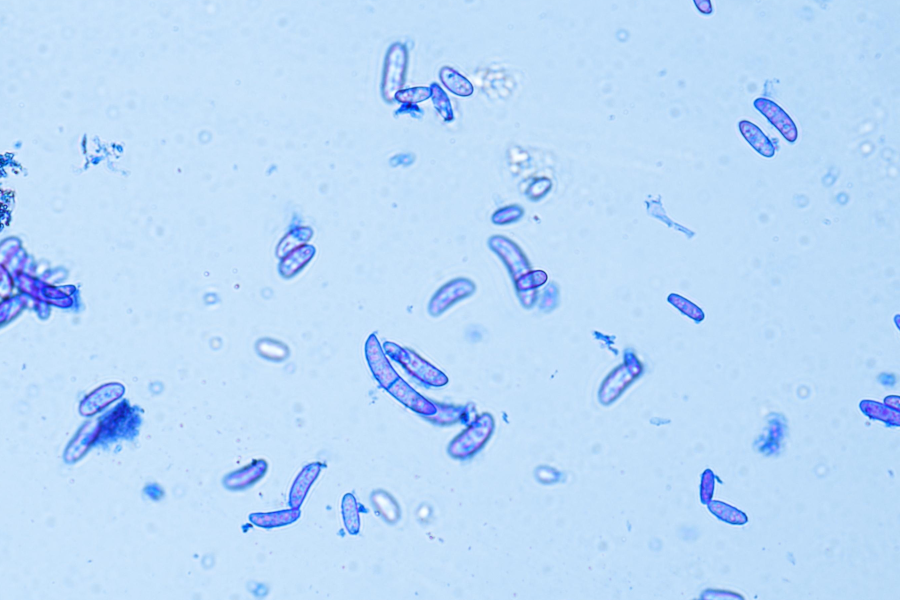
Extremophiles from Antarctica and the Atacama Desert will travel to the International Space Station (ISS) on April 8 to study their biological adaptation to microgravity and high-radiation conditions inside the station.
This research is part of a Chilean scientific mission headed to space, coordinated by the Space and Planetary Exploration Laboratory (SPEL) at the University of Chile. The experiments span genetics, advanced materials, and optical testing, as well as tests measuring the electrical conductivity of graphene in space and evaluating radiation and magnetic field instruments in orbital environments.
The microbiological research on extremophiles is led by Dr. Jenny Blamey, scientific director of the Biociencia Foundation and researcher at the University of Santiago de Chile (Usach), who is sending four native Chilean microorganisms into orbit. These organisms will travel in liquid and freeze-dried culture media to study their biological adaptation to microgravity and space radiation, with all experiments remaining inside the International Space Station (ISS).
One of the candidates is Deinococcus atacamensis, a microorganism resembling a marraqueta—a traditional Chilean bread roll known for its distinct four-lobed, split shape—capable of tolerating radiation exceeding 20,000 gray—over a thousand times human tolerance. “It is the organism reported to be most resistant to gamma radiation and extreme ultraviolet radiation,” noted the researcher from Usach’s Faculty of Chemistry and Biology and scientific director of the Biociencia Foundation, which hosted U.S. Ambassador Brandon Judd last week.
“I am optimistic about how this microorganism will perform in space. Based on our Earth-based experiments, I expect it to return alive or withstand conditions inside the ISS,” stated Dr. Blamey regarding the mission led by the University of Chile in collaboration with the University of Santiago de Chile (Usach), the Pontifical Catholic University of Chile (UC), and the Biociencia Foundation.
The experiments will remain on the International Space Station (ISS) for six months before returning to researchers this fall—specifically the Extremophile Laboratory at Usach’s Faculty of Chemistry and Biology and the Biociencia Foundation. Upon return, the team will continue research aimed at supporting life sustainability on the Moon and future crewed missions to Mars.
This research is supported by Project Anillo ATE220057 (University of Chile, Usach, and PUCV) and Fondecyt Grant 1251703 (University of Chile and the Biociencia Foundation), with key institutional collaboration from ANID, INACH, CORFO, and the AFOSR.
Finally, on May 11, a new space mission led by Dr. Blamey will expose six extremophile microorganisms directly to the harsh conditions of outer space. These specimens will remain mounted outside the ISS for approximately eight months before returning to Earth for post-flight laboratory analysis.