


Automation, artificial intelligence (AI), and advanced sensor integration are driving the transition toward a safer, more efficient, and sustainable mining industry.
Among the most critical stages in mineral processing is comminution—the energy-intensive process of reducing rock size. This stage is highly complex; oversized rocks frequently block crushers and screens, causing costly operational downtime and disrupting production continuity.
Para abordar este desafío, el Dr. John Kern Molina, académico del Departamento de Ingeniería Eléctrica de la Facultad de Ingeniería, lideró el desarrollo de un sistema robotizado inteligente para la identificación, seguimiento e impacto selectivo de rocas en procesos de conminución, previos al chancado primario. En este trabajo también participaron los investigadores de la misma Facultad, Dr. Claudio Urrea, Dr. Guillermo González y Dr. Harold Potter.
To address this industry bottleneck, Dr. John Kern Molina, a researcher in the Department of Electrical Engineering (Faculty of Engineering), led the development of a robotic system that identifies, tracks, and selectively breaks oversized rocks before primary crushing. The collaborative project also features key contributions from Usach researchers Dr. Claudio Urrea, Dr. Guillermo González, and Dr. Harold Potter.
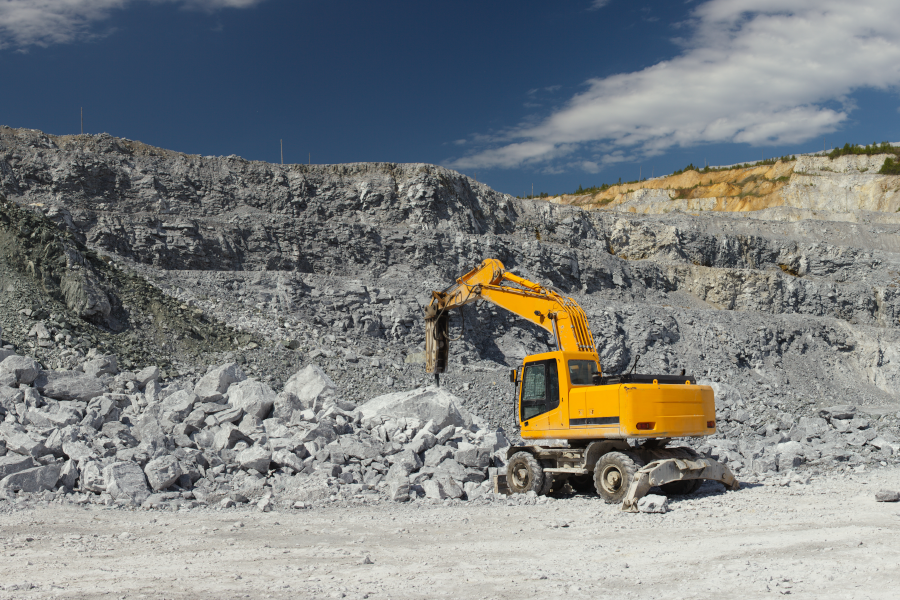
El Dr. John Kern Molina explica que la innovación, denominada Rocafit-ML, “consiste en un kit acoplable que puede instalarse, tanto en maquinarias del tipo martillos pica-roca nuevas como en equipos ya operativos. El sistema utiliza una fusión de sensores multimodales avanzada -incluyendo visión 3D duplex, visión térmica, radar LiDAR y sensor de partículas-, junto con algoritmos de inteligencia artificial y reconstrucción volumétrica para operar de forma autónoma, en ambientes complejos y de baja visibilidad”.
According to Dr. John Kern Molina, the innovation called Rocafit-ML, "consists of an attachable kit that can be installed on both new rock-breaking hammer machines and equipment already in operation. The system uses an advanced fusion of multimodal sensors—including duplex 3D vision, thermal imaging, LiDAR radar, and a particle sensor—along with artificial intelligence algorithms and volumetric reconstruction to operate autonomously in complex, low-visibility environments.”
The system resolves a persistent issue in mineral processing plants: “It provides a solution to jams in crushers and screens caused by enormous rocks resulting from blasting, due to the stochastic nature of the ore. This leads to downtime that is highly detrimental to the continuity of the crushing process,” emphasizes the lead researcher.
"By automating the machinery, process continuity and energy efficiency are improved, and equipment wear is reduced, extending its service life. Furthermore, safety is enhanced, as it eliminates the need for operators to be exposed to hazardous environments with airborne particles, noise, and the risk of rock impact.”
The researcher emphasizes that Rocafit-ML represents a major technological leap for the mining industry, bridging a critical gap left by existing market solutions. “While commercial teleoperation and semi-automated systems are widely used today, most still rely heavily on human intervention. They lack the advanced sensor fusion technology required to operate fully autonomously in zero-visibility environments, such as those blinded by heavy airborne dust or steam.”
Patenting and Scaling
Recently, USACH obtained a patent for this technology in Chile, a process supported by the team at the eOffice of Technology Management of the Office of the Vice Rector for Research, Innovation, and Creation.
Dr. John Kern emphasizes that protecting the intellectual property of this robotic system “is essential to ensuring the exclusivity and originality of a solution created at a public university and to guaranteeing that the advanced knowledge generated by the USACH research team has a solid legal foundation for its industrial scaling and commercialization.”
Currently, the project is moving toward industrial TRL 6 validation in real-world environments, “to establish itself as a key solution for the modernization and digitization of the national mining industry,” Dr. Kern notes.
Learn more about the varied technologies developed at the University of Santiago de Chile by visiting the Technology Management Directorate’s website (in Spanish).