


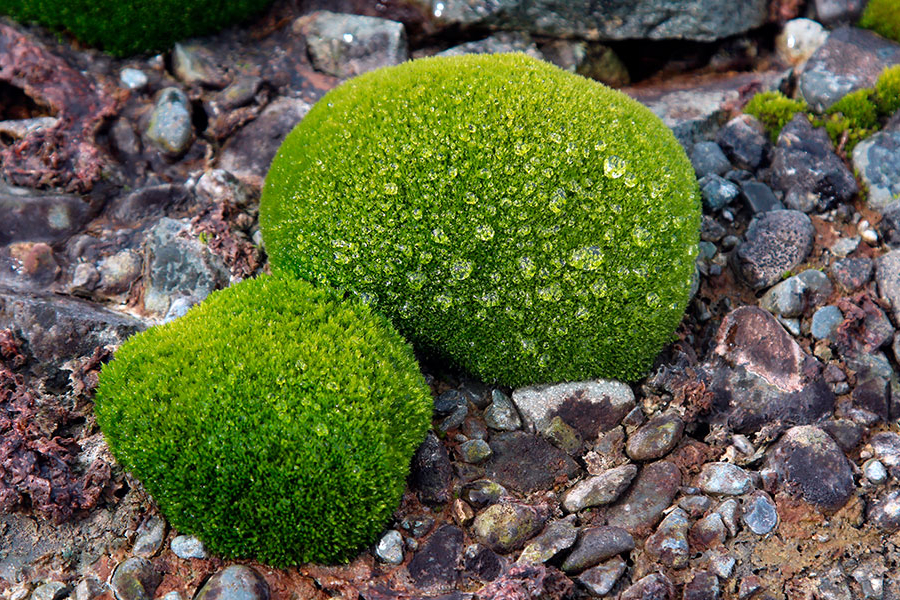
Heat waves and climate change are affecting the White Continent's species and ecosystems. In a study published in the journal Global Ecology and Biogeography, Dr. Gustavo Zúñiga, a researcher at the University of Santiago de Chile, evaluated the biological response of Antarctic moss to different microclimates across Antarctica.
The international research team from Chile, Australia, and Brazil demonstrated that polar organisms live at the limits of their physiological thresholds. Consequently, even small environmental changes can have a disproportionate effect on the physiology, distribution, and survival of Antarctic moss species.
“This study highlights that microclimatic heterogeneity at a fine scale is critical for understanding ecological responses to climate change—not only in Antarctica, but also in arid, alpine, and Arctic regions, as well as areas with creeping vegetation. Ignoring this variability can lead to underestimating the vulnerability or overestimating the resilience of species across the globe,” explains the scholar from the Faculty of Chemistry and Biology, who notes that “Antarctica acts as an early warning system for global climate change.”
“Ecological vulnerability is not uniformly distributed; instead, it depends critically on the microhabitats that the vegetation itself creates,” noted the University of Santiago de Chile researcher. He was referring to the study’s findings, which evaluated microclimates in East Antarctica—including continental peninsulas, islands, and coastal areas—using measurements collected during expeditions between 2018 and 2023.
The study was co-authored by Dr. Sharon Robinson, Melinda Waterman, Krystal Randall, and Michael B. Ashcroft from the University of Wollongong (Australia); Paulo Camara from the Department of Botany at the University of Brasília (Brazil); and Andre Thomazini from the Department of Agricultural Sciences at the Federal University of São João del-Rei (Brazil).